 Autolite QA
From a written requirement to a running test, automatically
Our AI pipeline takes a user story, PRD, or Figma flow and does the slow part of QA end to end. It analyses the requirement for ambiguity and missing rules, designs positive, negative, and edge-case scenarios, and generates production-quality automation code in your own framework and conventions. Senior engineers review every step before anything reaches your suite.
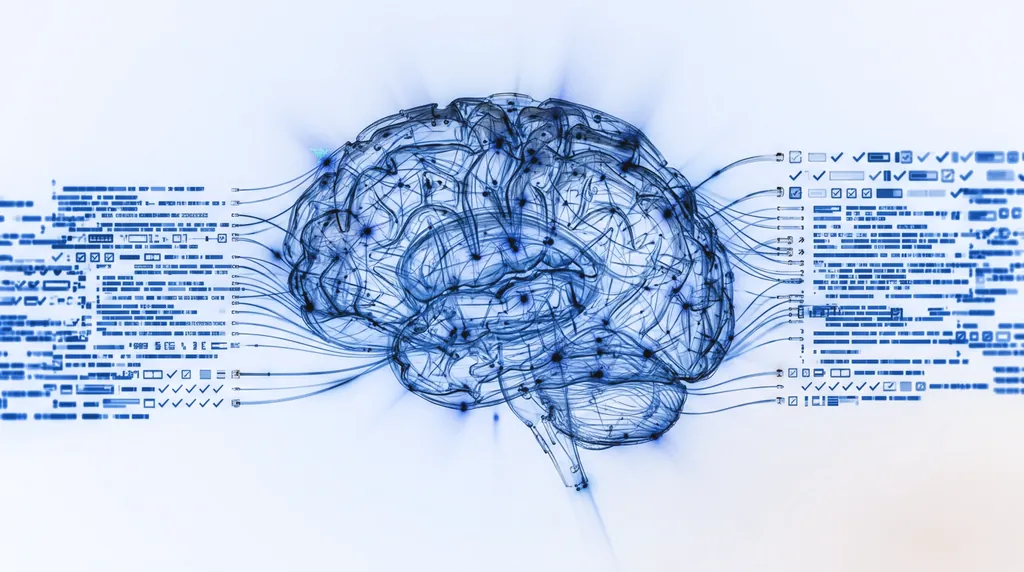
One requirement, four artifacts
Each stage produces something your team can read and approve: a gap report, a test design, real code, and a CI run linked back to the requirement.
What’s included
Requirement analysis
Ambiguities, contradictions, missing error states, and untestable statements are flagged before development starts, with suggested acceptance criteria.
Test design at full depth
Happy paths, negative paths, boundaries, permissions, and data combinations, written as readable Gherkin or test cases your product owner can sign off.
Automation code generation
Playwright, Selenium, Appium, or API tests generated against your page objects, fixtures, and naming conventions, not generic sample code.
Verified against the live app
Generated tests run against staging through MCP-driven browsers before review, so locators and flows are confirmed, not guessed.
Senior review gate
An engineer approves the analysis, the test design, and the code. Nothing merges on the model’s word alone.
End-to-end traceability
Every test links back to the requirement and acceptance criterion it proves, so coverage reports map to features, not files.
Four steps, no surprises
- step 1
Analyse
AI reviews the requirement and reports gaps and questions.
- step 2
Design
Scenarios and test cases are generated and approved.
- step 3
Generate
Automation code is written in your framework and run live.
- step 4
Merge
Reviewed tests join CI with traceability to the story.
Tools we work with
Tool-agnostic by principle — we recommend what fits your stack, not what we prefer.
Common questions
Is our data used to train models?+
No. We use enterprise model endpoints with no training on your data, and we follow your data-handling policies.
Will the generated code fit our existing framework?+
Yes. The pipeline is seeded with your page objects, fixtures, and coding standards, so its output reads like your team wrote it. If you have no framework yet, we build one first.
Keep exploring
Agentic test automationnew
planner · generator · healer · mcp
Testing AI & LLM productsnew
evals · red-teaming · guardrails
Self-healing test suites
locators · flows · auto-repair
Autonomous exploratory testing
goal-driven agents · visual ai · a11y
AI failure triage & flaky-test analysis
clustering · root cause · flake scoring
Predictive test selection
test impact · risk ranking · faster ci
AI-powered contract testing
schema drift · change prediction
AI-skilled engineers on demand
staff augmentation · pods
Start with the 2-week Automation Readiness Audit
Fixed scope, fixed price. You get an honest report and a prioritised roadmap, whether or not you hire us for the build.