 Autolite QA
AI agents that build your test suite — and engineers who keep them honest
We set up and operate agentic test loops: a planner agent explores your app and writes a readable test plan, a generator agent turns it into real Playwright code, and a healer agent repairs what breaks. Agents drive a live browser through the Model Context Protocol (MCP), and every change lands as a pull request a senior engineer reviews.
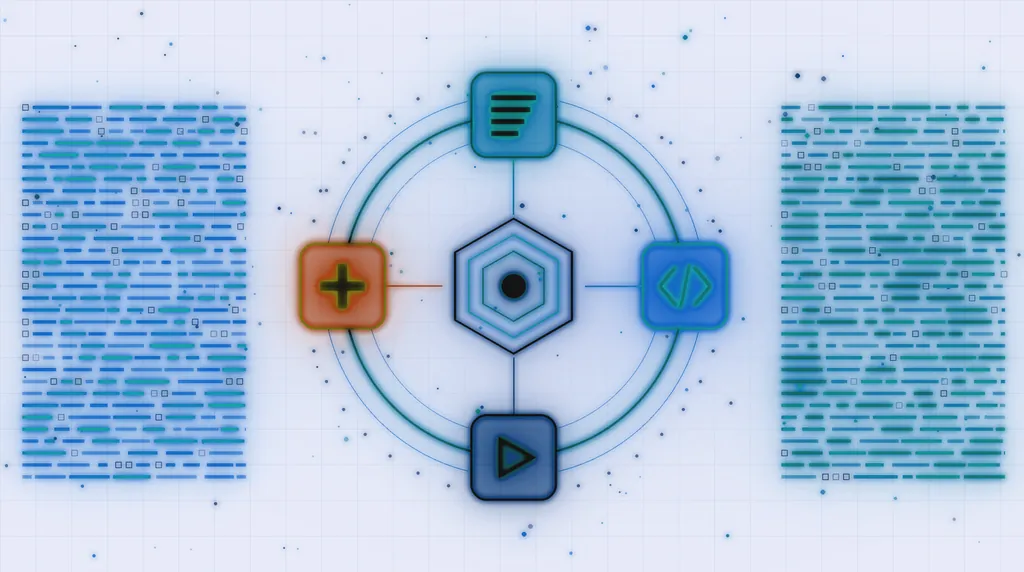
The agentic loop
Plan, generate, run, heal — chained together and repeated as your product changes. The human review gate sits between the agents and your main branch.
What’s included
Planner → generator → healer
We wire up Playwright’s built-in test agents, or an equivalent loop for your stack, with seed tests, fixtures, and conventions that match your codebase.
MCP-driven browsers
Agents act on a real browser through Playwright MCP, reading the accessibility tree rather than guessing from screenshots, so the locators they write are stable.
Plans humans can read
Every scenario starts as a Markdown test plan your product owner can review before a line of test code exists.
Works with your coding agent
Claude Code, GitHub Copilot, Cursor, or Codex — we configure the agent definitions and guardrails for whichever your engineers already use.
Guardrails, not autopilot
Scoped permissions, test-only environments, budget limits, and a hard rule: agents never weaken an assertion to make a test pass.
No vendor lock-in
The output is ordinary test code and Markdown in your repository. If you switch models or tools tomorrow, the suite keeps running.
Four steps, no surprises
- step 1
Seed
Write the seed test, fixtures, and test data the agents start from.
- step 2
Plan
The planner agent explores a flow and drafts a Markdown test plan.
- step 3
Generate
The generator agent writes tests and checks locators live.
- step 4
Heal & review
The healer fixes failures; an engineer approves the pull request.
Tools we work with
Tool-agnostic by principle — we recommend what fits your stack, not what we prefer.
Common questions
Can we trust tests written by an agent?+
Only after review — which is why every agent change goes through a pull request with a senior engineer. Agents are fast at writing and maintaining tests; deciding what is worth testing stays with people.
Does this work for mobile apps?+
Yes. The same loop runs against Android and iOS through Appium-based MCP servers, on emulators, simulators, or device farms.
Which AI model do you use?+
Whichever your security team approves. We run on enterprise endpoints with no training on your data, and the setup is model-agnostic.
Keep exploring

Requirements to automation codenew
requirements → tests → code
Testing AI & LLM productsnew
evals · red-teaming · guardrails
Self-healing test suites
locators · flows · auto-repair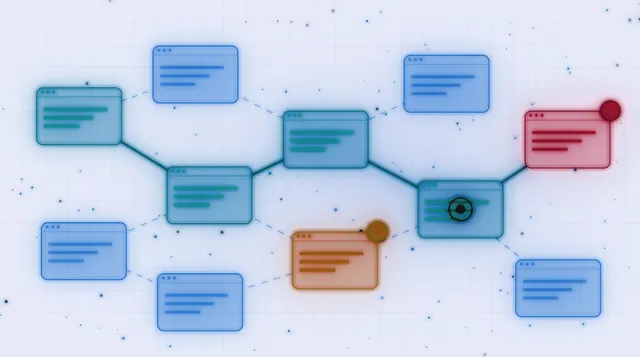
Autonomous exploratory testing
goal-driven agents · visual ai · a11y
AI failure triage & flaky-test analysis
clustering · root cause · flake scoring
Predictive test selection
test impact · risk ranking · faster ci
AI-powered contract testing
schema drift · change prediction
AI-skilled engineers on demand
staff augmentation · pods
Start with the 2-week Automation Readiness Audit
Fixed scope, fixed price. You get an honest report and a prioritised roadmap, whether or not you hire us for the build.